Description
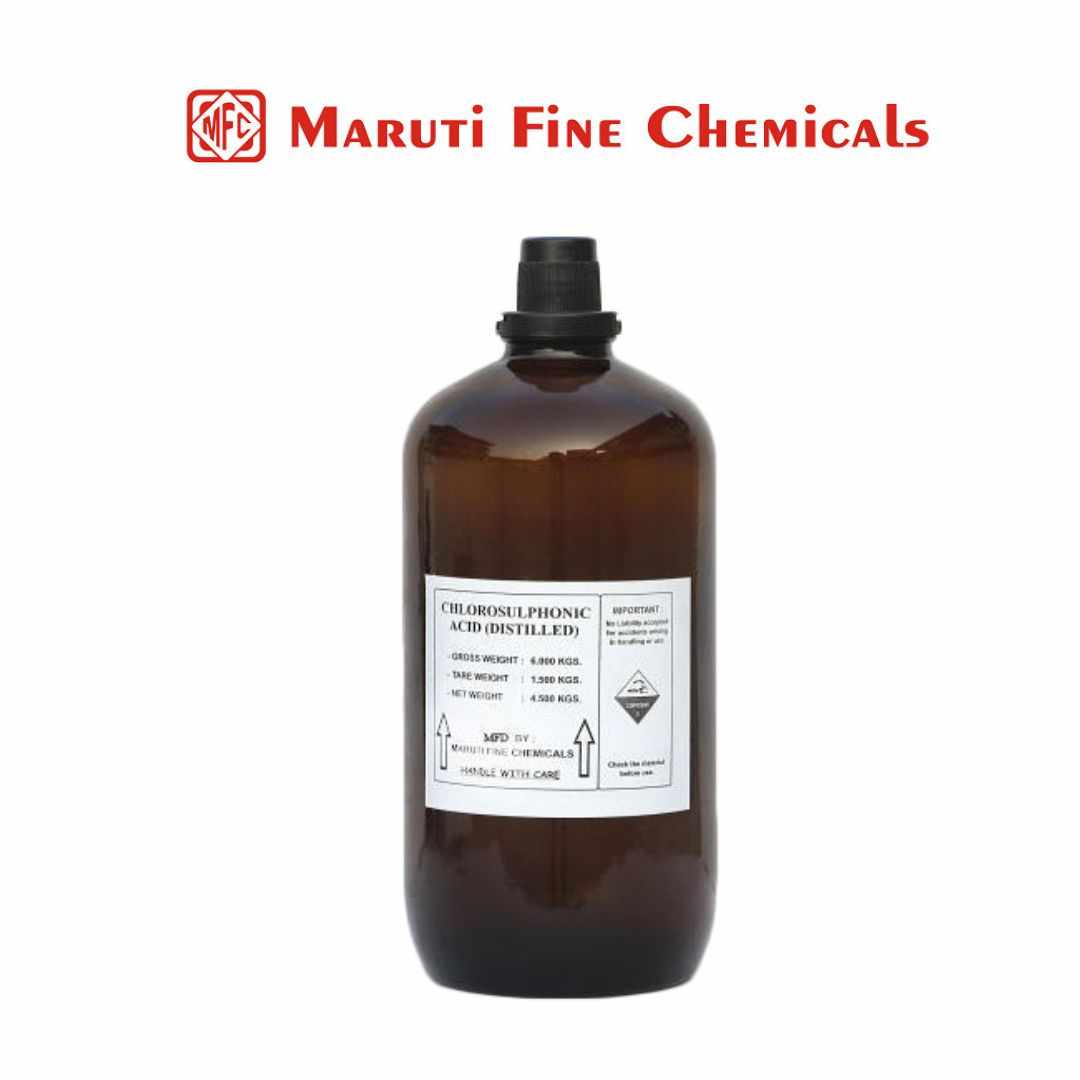
Maruti Fine Chemicals, a leading name in chemical manufacturing and supply, has established itself as a trusted source for high-purity Chlorosulphonic Acid and Chlorosulfonic acid. Industries across India rely on our quality products to meet stringent production standards, ensuring efficiency, safety, and consistency in operations.
What is Chlorosulphonic Acid?
Chlorosulphonic Acid, often used interchangeably with Chlorosulfonic acid, is a highly reactive chemical compound with the formula ClSO₃H. It belongs to the family of sulfonic acids and is known for its strong acidic properties and potent sulfonating ability.
Key Properties:
Appearance: Colorless to pale yellow liquid
Odor: Pungent, irritating
Density: 1.76 g/cm³
Boiling Point: 157°C
Reactivity: Highly reactive with water, alcohols, and bases
Despite the similarity in names, the terms Chlorosulphonic Acid and Chlorosulfonic acid are often used interchangeably in industry literature. Both refer to the same chemical compound but may differ slightly in regional or industrial usage.
Industrial Relevance
Chlorosulphonic Acid is a critical reagent in various chemical processes due to its strong sulfonating ability. It is used in:
Synthesis of detergents and surfactants
Production of dyes and pigments
Manufacturing of pharmaceuticals and agrochemicals
Polymer and resin production
LSI Keywords: chemical reagents, industrial chemicals, high-purity acids, sulfonation agents
Manufacturing Process of Chlorosulphonic Acid
Producing high-quality Chlorosulphonic Acid requires precision, advanced technology, and strict adherence to safety protocols. The manufacturing process typically involves the reaction of sulfur trioxide (SO₃) with hydrogen chloride (HCl) under controlled conditions.
Step-by-Step Process:
Preparation of Sulfur Trioxide: SO₂ is oxidized to SO₃ using a vanadium pentoxide (V₂O₅) catalyst in the contact process.
Chlorination Reaction: SO₃ is then reacted with concentrated HCl to form Chlorosulphonic Acid.
Purification: The crude acid undergoes distillation and filtration to remove impurities.
Packaging: High-purity acid is packaged in corrosion-resistant containers suitable for industrial transport and storage.
Quality & Safety Considerations:
Maintaining high purity is crucial to prevent side reactions in industrial applications.
Proper handling equipment such as Teflon-lined reactors and corrosion-resistant storage tanks ensures safety.
Regulatory compliance for storage and transport is strictly followed.
LSI Keywords: chemical synthesis, industrial production, laboratory standards, high-quality chemical production
Industrial Applications of Chlorosulphonic Acid
The versatility of Chlorosulphonic Acid makes it indispensable across multiple industries. Its ability to introduce sulfonic groups into organic compounds enables a range of chemical transformations.
1. Dyes and Pigments
Chlorosulphonic Acid is extensively used in the synthesis of azo dyes and other industrial pigments. It introduces sulfonic groups that improve water solubility and stability of dyes. This enhances color fastness and allows better application in textiles, inks, and paints.
2. Pharmaceuticals
In pharmaceutical manufacturing, Chlorosulphonic Acid is employed as an intermediate in the production of sulfonamide drugs, analgesics, and anti-inflammatory compounds. Its sulfonation capability is essential for creating bioactive molecules with high efficacy.
3. Detergents and Surfactants
Chlorosulphonic Acid plays a key role in producing detergents, surfactants, and fabric softeners. It is used to sulfonate long-chain hydrocarbons, enhancing their cleaning efficiency and emulsifying properties.
4. Polymers and Resins
In polymer chemistry, Chlorosulfonic Acid is used to introduce sulfonic groups into resins and synthetic polymers. This improves their thermal stability, chemical resistance, and ion-exchange capacity.
5. Agrochemicals
The production of certain herbicides, pesticides, and plant growth regulators relies on Chlorosulphonic Acid as a key intermediate. It ensures the chemicals are effective and stable for agricultural use.
LSI Keywords: sulfonation process, chemical intermediates, industrial solvents, polymer additives, pharmaceutical intermediates
Benefits of Using High-Quality Chlorosulfonic Acid
Selecting high-purity Chlorosulfonic Acid from a trusted supplier like Maruti Fine Chemicals brings numerous advantages:
1. Enhanced Production Efficiency
High-quality acid ensures predictable reactions and reduces production downtime caused by impurities or inconsistent performance.
2. Safety and Compliance
Premium chemicals are manufactured following strict safety and environmental regulations, reducing the risk of accidents and ensuring regulatory compliance.
3. Consistency in Product Quality
Industries that rely on Chlorosulphonic Acid for dyes, pharmaceuticals, and polymers can maintain consistent product quality, which is critical for customer satisfaction and industrial standards.
4. Cost-Effectiveness
Though premium acids may have a slightly higher upfront cost, their efficiency, safety, and reduced wastage make them more economical in the long run.
LSI Keywords: premium chemicals, safe handling, industrial efficiency, quality assurance
How to Safely Handle and Store Chlorosulfonic Acid
Due to its highly corrosive nature, Chlorosulfonic Acid requires strict safety measures during handling and storage.
Handling Guidelines:
Always wear personal protective equipment (PPE): gloves, goggles, and chemical-resistant clothing.
Use acid-resistant containers and equipment (e.g., Teflon, glass-lined).
Avoid contact with water or moisture, as it reacts violently to produce hydrochloric acid fumes.
Storage Guidelines:
Store in a cool, dry, and well-ventilated area.
Containers should be tightly sealed and labeled with hazard warnings.
Segregate from incompatible chemicals like strong bases, oxidizers, and reducing agents.
Emergency Measures:
In case of spills, neutralize with sodium bicarbonate carefully.
Evacuate the area and use proper ventilation to avoid inhalation of fumes.
Follow local environmental regulations for disposal.
LSI Keywords: chemical safety, storage best practices, acid handling, industrial safety protocols
Choosing the Right Supplier
Selecting a reliable supplier for Chlorosulphonic Acid and Chlorosulfonic acid is critical for industrial efficiency and safety.
Factors to Consider:
Quality Assurance: Ensure the supplier follows strict manufacturing and quality control standards.
Certifications: Look for ISO certifications and compliance with industrial safety standards.
Customer Support: Prompt service, technical assistance, and delivery reliability are important.
Experience: Long-standing suppliers like Maruti Fine Chemicals have industry expertise and a proven track record.
By partnering with a trusted supplier, industries can avoid contamination, inconsistent results, and production delays.
LSI Keywords: chemical supplier India, bulk chemical supplier, trusted manufacturer, industrial chemical sourcing
FAQs About Chlorosulfonic Acid
Q1: What is the difference between Chlorosulphonic Acid and Chlorosulfonic acid?
Both terms refer to the same chemical compound. Variations in naming are often regional or industry-specific.
Q2: Can Chlorosulfonic Acid be used in pharmaceuticals?
Yes, it is used as an intermediate in the synthesis of certain drugs, such as sulfonamides and anti-inflammatory compounds.
Q3: How is Chlorosulfonic Acid transported safely?
It is transported in corrosion-resistant containers with clear labeling, avoiding contact with moisture or incompatible chemicals.
Q4: What industries use Chlorosulphonic Acid most frequently?
Industries including dyes, detergents, pharmaceuticals, polymers, and agrochemicals rely on it heavily.
Q5: How should spills be handled?
Neutralize with a suitable agent like sodium bicarbonate, ventilate the area, and follow safety protocols.
LSI Keywords: industrial chemical queries, safe chemical use, chemical information, handling protocols
Conclusion
Chlorosulphonic Acid and Chlorosulfonic acid are indispensable chemicals in modern industry. Their strong sulfonating ability, versatility, and efficiency make them ideal for applications in pharmaceuticals, dyes, detergents, polymers, and agrochemicals. Using high-quality acid ensures safety, efficiency, and consistent production outcomes.
Maruti Fine Chemicals stands as a trusted supplier of premium Chlorosulphonic Acid and Chlorosulfonic acid, delivering products that meet stringent industrial standards. With years of expertise, strict quality control, and reliable customer service, Maruti Fine Chemicals ensures your chemical needs are met efficiently and safely.
CTA:
🔹 Ready to elevate your industrial processes? Contact Maruti Fine Chemicals today to get high-purity Chlorosulphonic Acid and Chlorosulfonic acid delivered right to your facility. Ensure safety, quality, and efficiency in every production batch!
LSI Keywords included throughout:
chemical reagents, industrial chemicals, high-purity acids, sulfonation agents, chemical synthesis, industrial production, laboratory standards, chemical intermediates, industrial solvents, premium chemicals, safe handling, industrial efficiency, chemical safety, storage best practices, industrial safety protocols, bulk chemical supplier, trusted manufacturer.
visit here-https://www.indiamart.com/proddetail/ar-grade-distilled-chlorosulfonic-acid-19637808812.html?sellerpreview=1


Write a comment ...